I walked into the first room and was quite literally struck.
By a meteor.
I knew which meteor it was as soon as I saw it.

The Chicxulub asteroid struck Earth about 66 million years ago. Estimated to have been 10 to 15 kilometres (6 to 9 miles) wide, it crashed into what is now Mexico’s Yucatán Peninsula. Chicxulub was ground zero.
The impact contributed to the extinction of approximately 75% of Earth’s species, including the non-avian dinosaurs.
So why was I staring at a glass depiction of this destructive asteroid in a museum in Corning, New York?
Interestingly, the Chicxulub impact generated such extraordinary heat that some rock melted into tiny glass-like spheres, which were scattered across the planet.
And here I was at the Corning Museum of Glass, surrounded by a material that can be both remarkably strong and surprisingly fragile.
Like marriages. Like families.
But I’m getting ahead of myself.
A Summer of Difficult Decisions
To understand why I was standing in front of a meteorite in Corning, New York, we need to go back a few months, to when I crossed the border into Canada.
I wasn’t going on vacation.
I had family members who needed me. Unfortunately, they didn’t realize they needed me, and initially, it felt as though I was inserting myself into their lives. But the longer I stayed, the clearer it became that stepping in was necessary if they were going to remain safe and healthy.
There were difficult decisions to make, and when your family of origin is as fractured as mine, there isn’t necessarily anyone to lean on.
Let me rephrase that. There wasn’t anyone within the family to lean on.
As the saying goes, “You can choose your friends, but you can’t choose your relatives.”
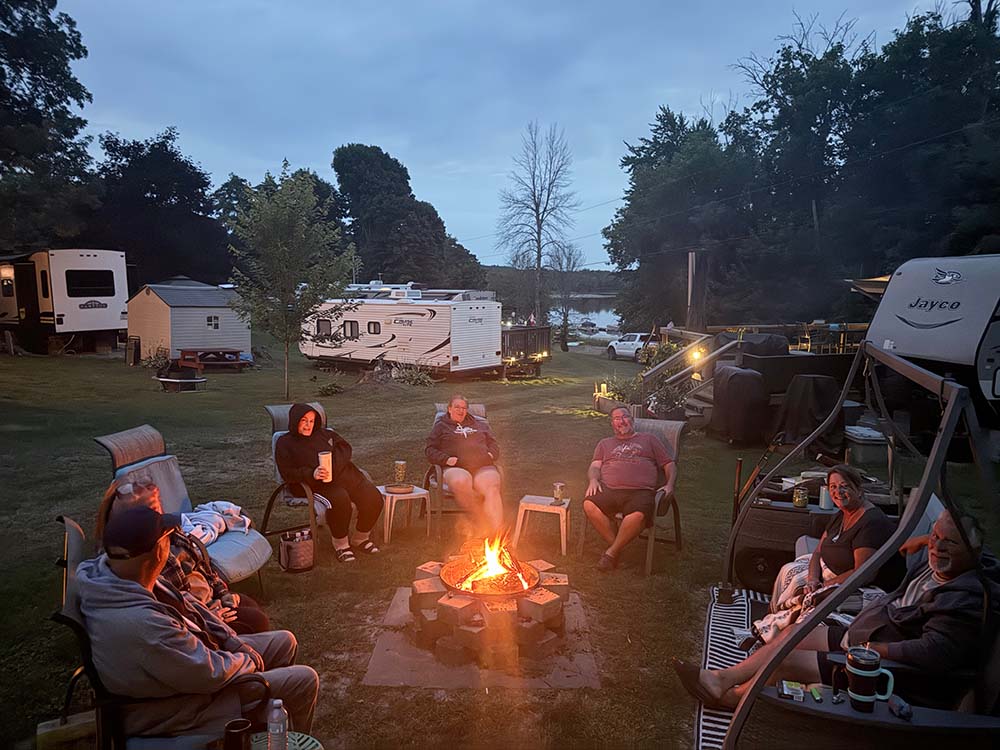
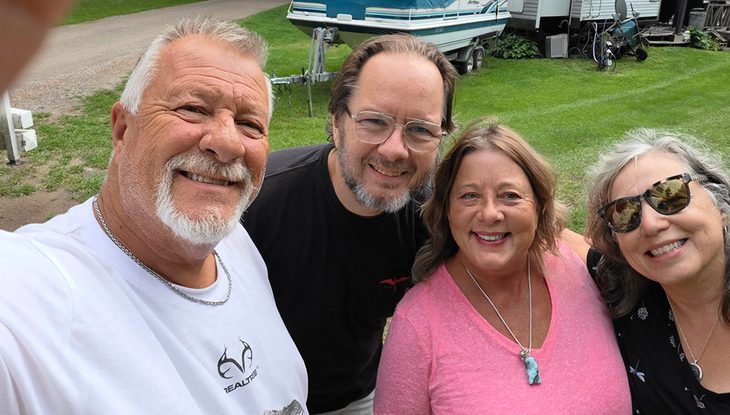
When I crossed the border around the July holiday, I had nowhere to stay or camp. My friends Rick and Judi arranged for me to stay at their seasonal mobile home park. I spent the first month there, borrowing their car to travel back and forth to Kingston.
It was a soft place to land, surrounded by friendly, happy, loving faces.
And then there’s Lonnie.
Lonnie and I go way back. One of my earliest childhood memories is of visiting my grandparents when I was about two years old. They’d bought the house where my aunt and cousin still live back in the year I was born.
Every day, I’d put on my shoes and walk across the court to visit Mrs. Green.
I’m convinced Mrs. Green could have been the model for Mrs. Claus. Impeccably dressed, always smiling, she was one of the friendliest women in my young world.
And she always gave me candy.
Mrs. Green was Lonnie’s mother.
When I returned to Kingston more than a decade ago to help my own mother, Lonnie was the real estate agent I hired. She became an invaluable resource in getting the house renovated and sold.
And here I was, back in Kingston, relying on her again.
Long retired, Lonnie became my soft place to land in the city. She helped me solve problems, connected me with resources, and occasionally took me out dancing when I desperately needed to shake off some stress.
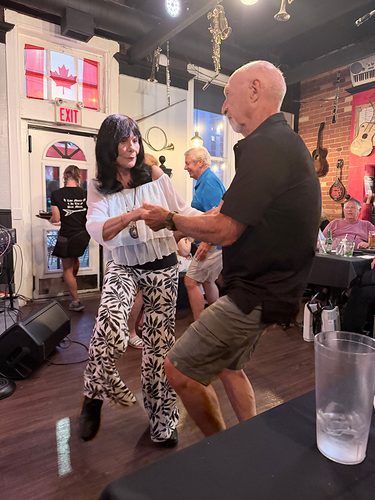
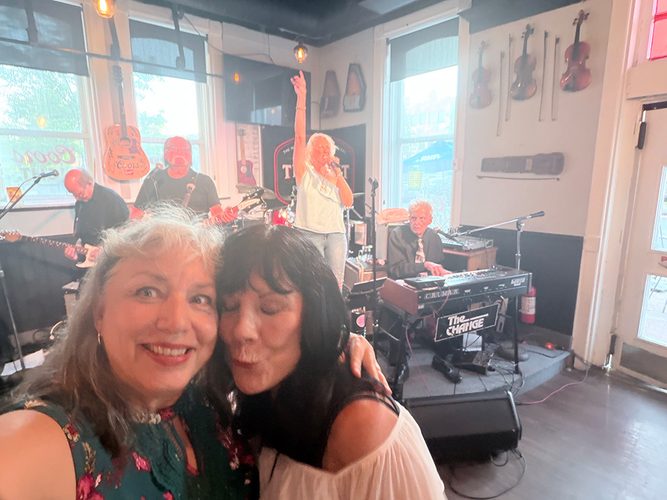
No, we can’t choose our relatives. But I’ve been fortunate to have some wonderful friends.
Throughout my time in Kingston, friends I’ve known for decades stopped by to visit, brought food, offered encouragement and found ways to make difficult days a little easier. Every gesture of friendship and kindness meant more than they probably realized.
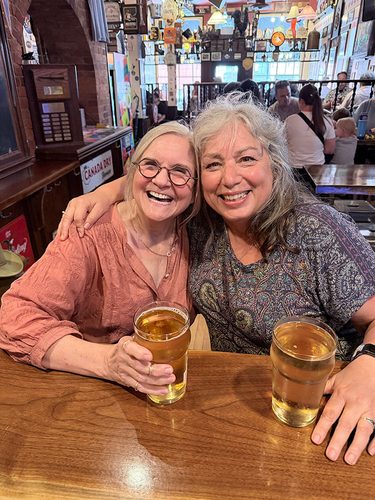
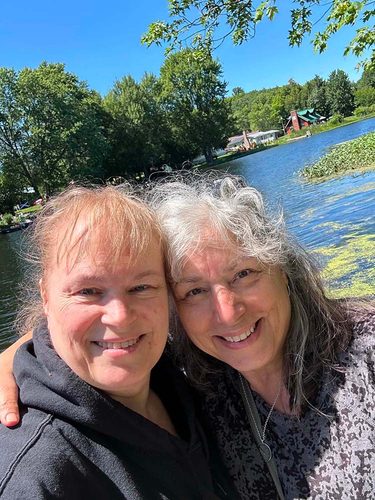
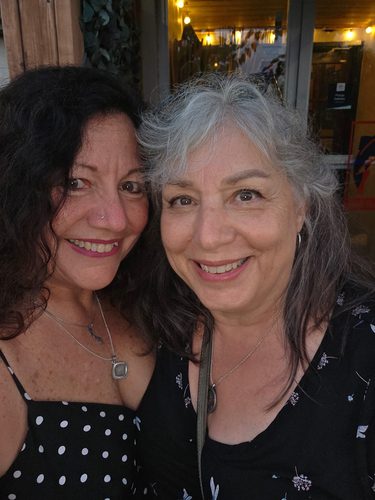
By the time I was ready to return to Virginia, I’d been through some of the most stressful months of my life. My friends had lightened the load, sometimes through practical assistance and sometimes simply by being there when I needed someone to talk to.
I was exhausted.
And I was ready for a little fun.
The Long Road Home, With a Few Detours
For some reason, both Google Maps and my Garmin GPS kept trying to reroute me toward Washington, DC. Anyone who’s driven through that area knows that getting too close to the capital can add hours to a journey.
I knew where I wanted to go, but apparently neither navigation system agreed.
Despite my vigilance, I didn’t always catch the rerouting before making a wrong turn. The whole drive felt like a battle with technology.
After months of navigating obstacles and making course corrections, I was beginning to think even my GPS had joined the opposition.
I returned to Sampson State Park, on the east side of Seneca Lake, for the night.
After pulling into my campsite, I discovered that my electrical cord wouldn’t reach the pedestal. I went back to the office, hoping to change sites, but the staff offered me an extension cord instead.
Problem solved.
For months, problems had seemed to arrive in packs. There was always something else demanding my attention, another decision to make, another obstacle to overcome.
I’d learned to ask myself, What’s the next important thing?
Trying to manage everything at once was overwhelming. But one problem at a time? That I could handle.
And on this particular evening, all I needed was an electrical cord that reached the pedestal and a few hours of uninterrupted sleep.
The next morning, I packed up camp while it was still dark, returned the extension cord, and headed toward Watkins Glen.
My early start was rewarded with a beautiful sunrise over the fields, with Seneca Lake stretching out in the background.
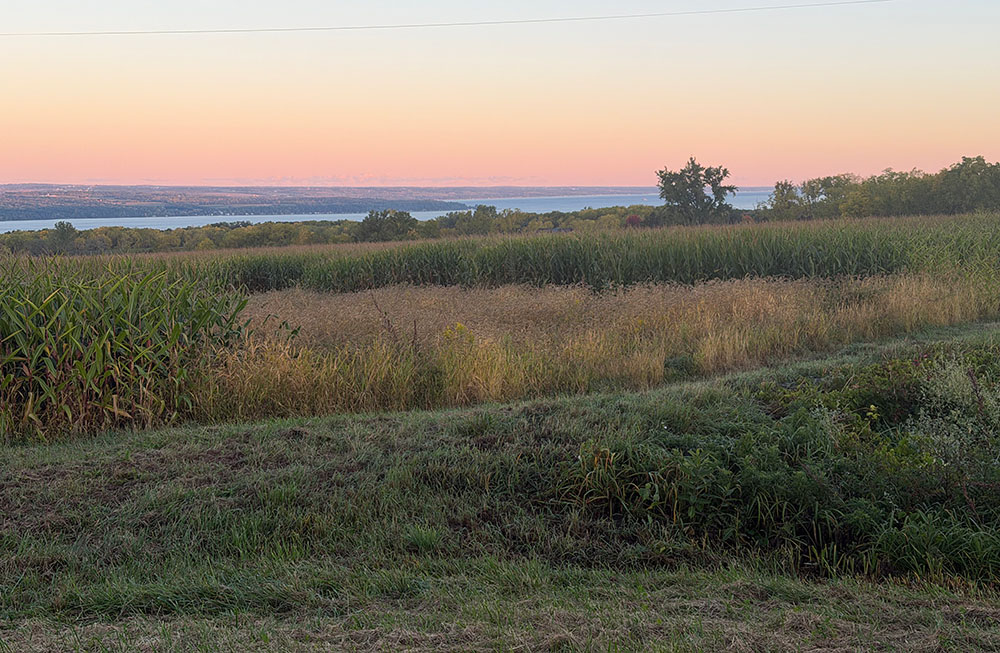
These were the views I’d hoped to experience during my first Finger Lakes adventure. Sometimes you need a second go at things before you get what you want.
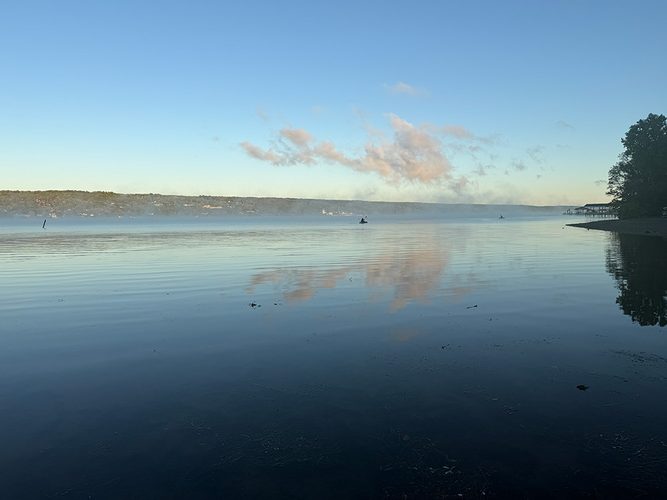

I arrived in Watkins Glen bright and early, parking near the Visitor Center to confirm I wasn’t losing my mind.
While writing my recent post about the towns of the Finger Lakes, I’d mentioned a racetrack display inside the Visitor Center. But when I tried to research whether it represented the original road course or the modern Watkins Glen International circuit, I couldn’t find a single reference to the display online.
It was almost as though it didn’t exist.
The Visitor Center was still closed, but I peered through the window.
There it was!

And on closer inspection, I could see that it was a model of the current Watkins Glen racetrack, not the historic road course.
Not so crazy after all. I took a photo as proof.
Mystery solved, I crossed the street to the Blueberry Inn and Cafe before the morning crowd arrived.
I ordered my favorite coffee, along with a bagel and lox. It could have used a few more onions, but it was still delicious.

I ate half while sitting in my truck and saved the rest for lunch after exploring Corning.
Corning was the real side quest.
The Corning Museum of Glass had been closed during my first road trip through the Finger Lakes, and it was the one place I was determined to return to.

While writing about that road trip, I also discovered the Rockwell Museum and the Gaffer District in downtown Corning. Naturally, my list of things to see grew.
Which brings me back to the meteorite.
An Unexpected Connection Between Corning and Chicxulub
In retrospect, it seems fitting that James and I married in Chicxulub, Mexico, on January 2, 2024.
We chose the location because we could rent a huge house for our family and get married on the beach, without the price tag of Mexico’s better-known resort destinations.
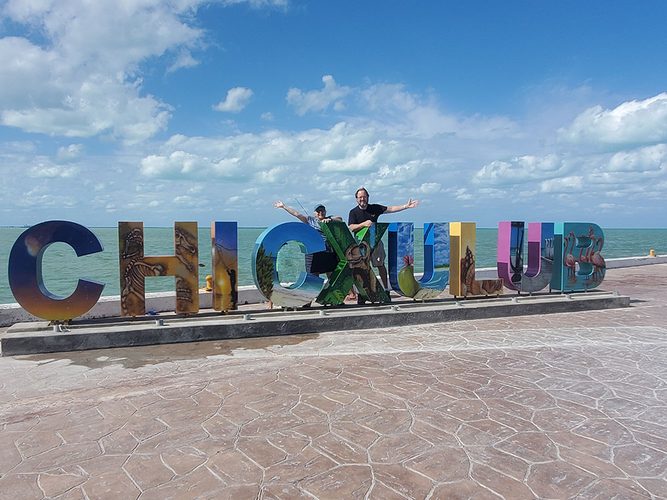
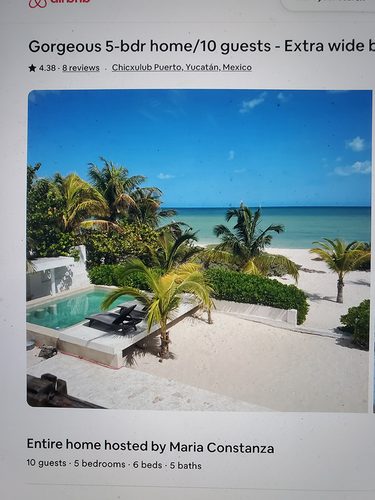
While playing tourist before the wedding, I spotted the meteorite museum in nearby Progreso. I wanted to visit, but organizing a wedding in a country where you don’t speak the language comes with its own challenges. There simply wasn’t enough time.
I figured I’d get there eventually. With my son and daughter-in-law living in Cancún, a return trip is likely.
What I never expected was to encounter Chicxulub in a glass museum in upstate New York!
Meeting James was a little like being struck by a meteor, too. Except that, before impact, I ran for my life. It took a few years before I trusted that I could survive the collision.
And somehow, after initially running from the impact, I ended up marrying him at ground zero of the Chicxulub asteroid.
A place where one chapter of Earth’s history came to a dramatic end became the place where we began a new chapter of our own.
Of course, the artists weren’t thinking about my marriage when they created this extraordinary piece of glass art.
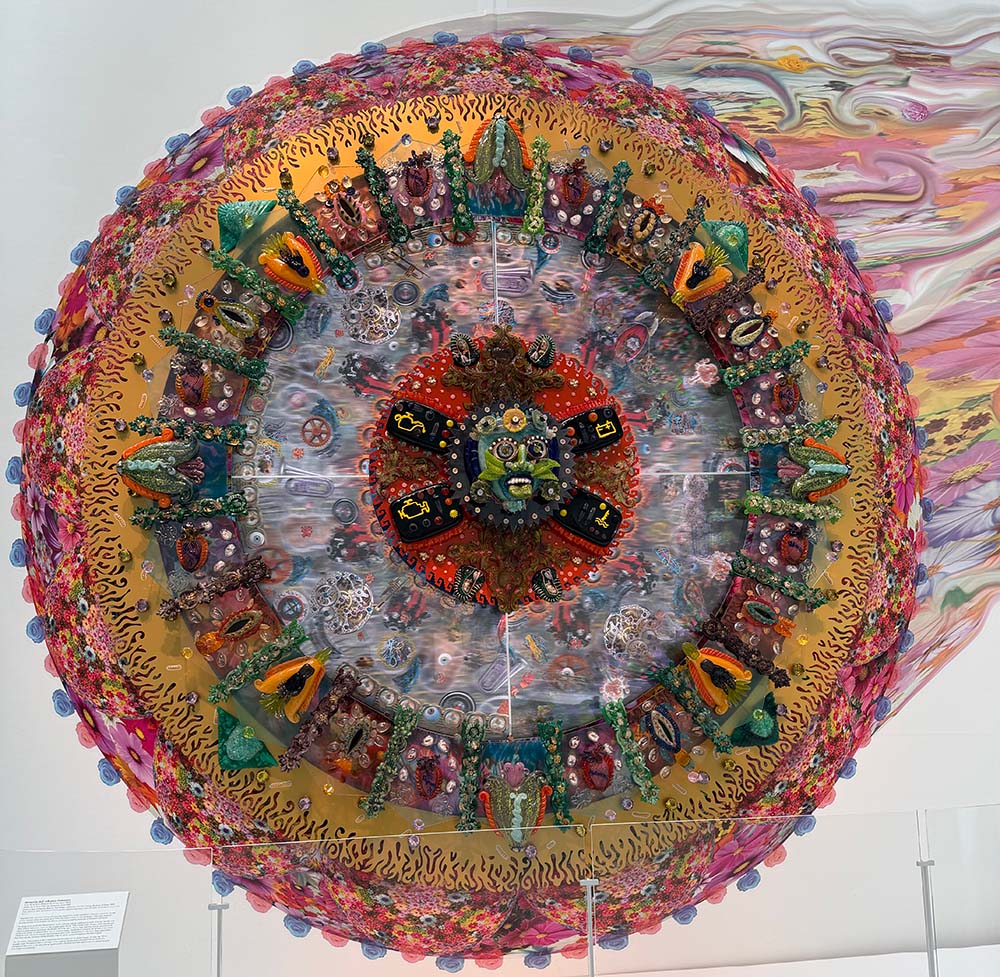
Mexican-American brothers Einar and Jamex de la Torre created Meteorite dall’ Influenza Veneziana to explore the transformative influence of immigration and cultural exchange.
The artwork incorporates Venetian glassmaking techniques that originated in Murano, Italy, and eventually spread around the world. The meteorite serves as a metaphor for the powerful impact of ideas and traditions crossing borders and influencing other cultures.
And there I was, a Canadian immigrant who had just spent months back in my country of birth, dealing with family responsibilities that hadn’t disappeared simply because I’d built a life somewhere else.
Another unexpected connection.
Extraordinary Art at the Corning Museum of Glass
After that unexpected encounter with the meteorite, I continued through the Corning Museum of Glass, marvelling at the creativity of the artists whose work filled the galleries.
I was overwhelmed by the beauty and sheer variety of what I saw. Every time I thought I’d found a favourite, something else caught my attention.


There were garments made entirely of glass, their folds and draping so natural that they appeared to be made of fabric. A sculpture of a lynx, inspired by a sketch by Albrecht Dürer, recreated the animal’s fur using thousands of tiny pieces of cut glass. Imagine making something as hard and unforgiving as glass look soft enough to stroke!


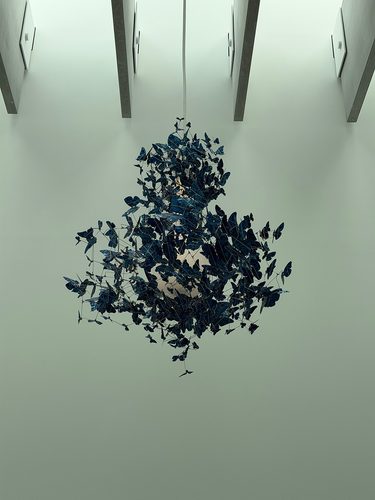
Overhead hung Virtue of Blue, a magnificent chandelier by Dutch designer Jeroen Verhoeven. Delicate blue butterflies, fashioned from solar-panel materials, seemed to flutter around a central light. It was an unexpected marriage of art and technology, and absolutely stunning.

Then there was a beautiful arched panel depicting a tulip garden, positioned in front of a large window where the daylight illuminated the glass flowers and leaves. The piece, by Japanese artist Kimiake Higuchi, captured the delicate beauty of a garden in bloom.


An exhibition called Tough Stuff: Women in the American Glass Studio celebrated the contributions of women to glass art. Among the displays were an extraordinary table setting, complete with glass eggs, and cacti so lifelike I could almost believe they belonged in a desert garden.
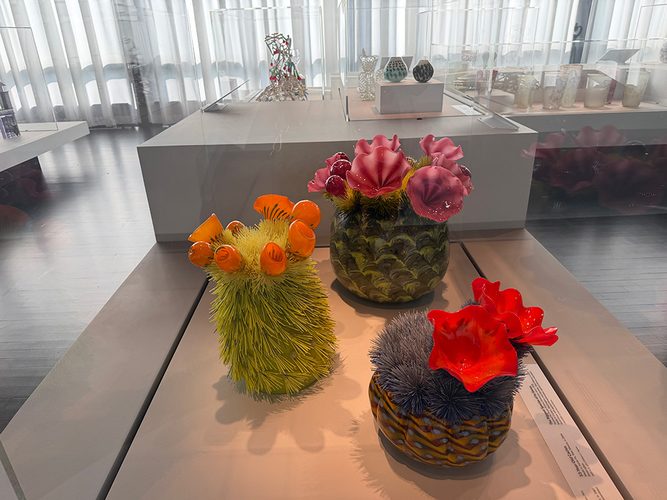

And the surprises kept coming.
And then there were what looked to me like hair extensions, sweeping and curling along in the display. Except they weren’t hair at all. They were impossibly fine strands of glass! I could hardly believe something so rigid could appear so fluid.
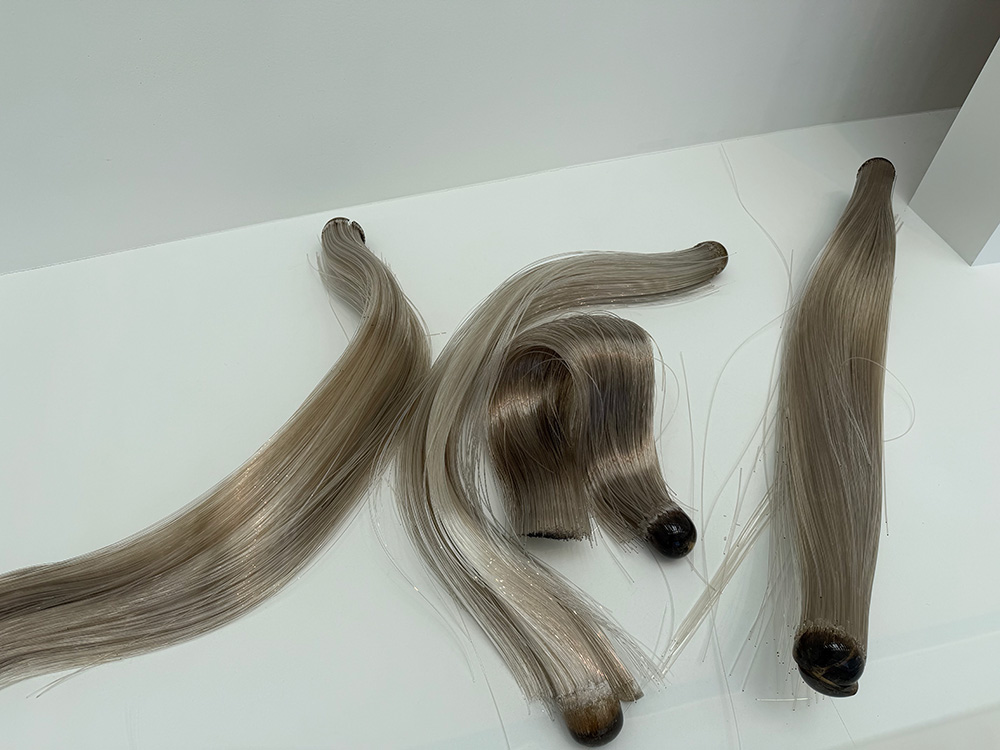
Toots Zynsky’s Smokey Comet Installation I uses glass drawn into extremely thin strands, creating the illusion of flexibility.
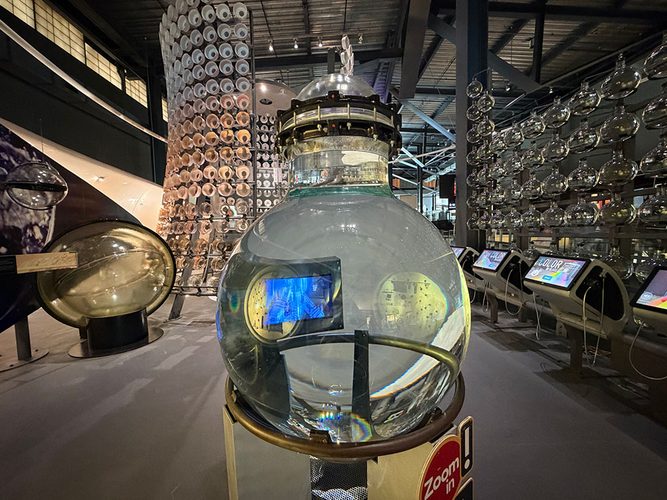
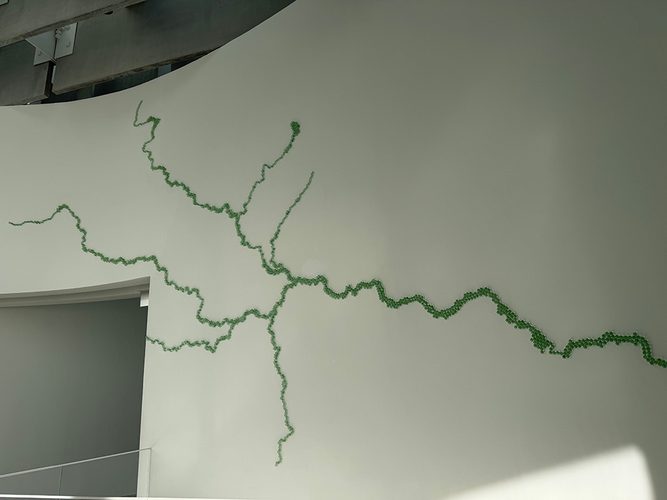
Shelves of glass vessels, arranged by colour, created the impression of a forest of trees. Enormous installations filled entire spaces, while glass vines appeared to grow along the walls.
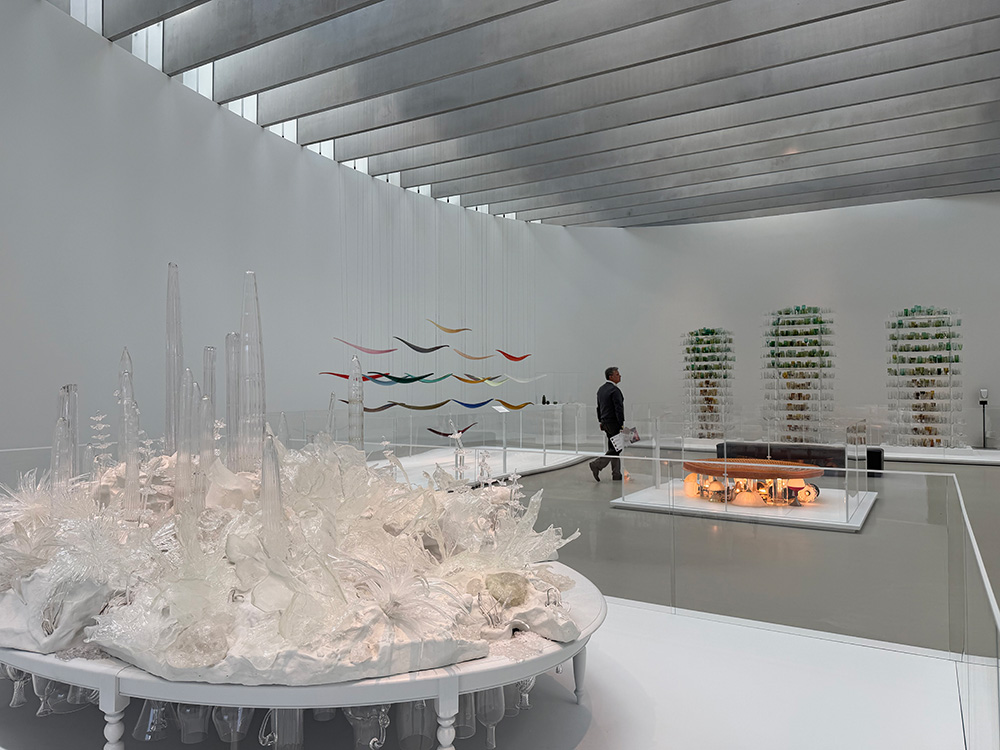
I was fascinated by the artists’ ability to take a material we associate with windows, drinking glasses and everyday objects and transform it into something entirely unexpected.
I also watched a glassblowing demonstration, where the artisans transformed what began as a collection of crushed material into a beautiful dish.
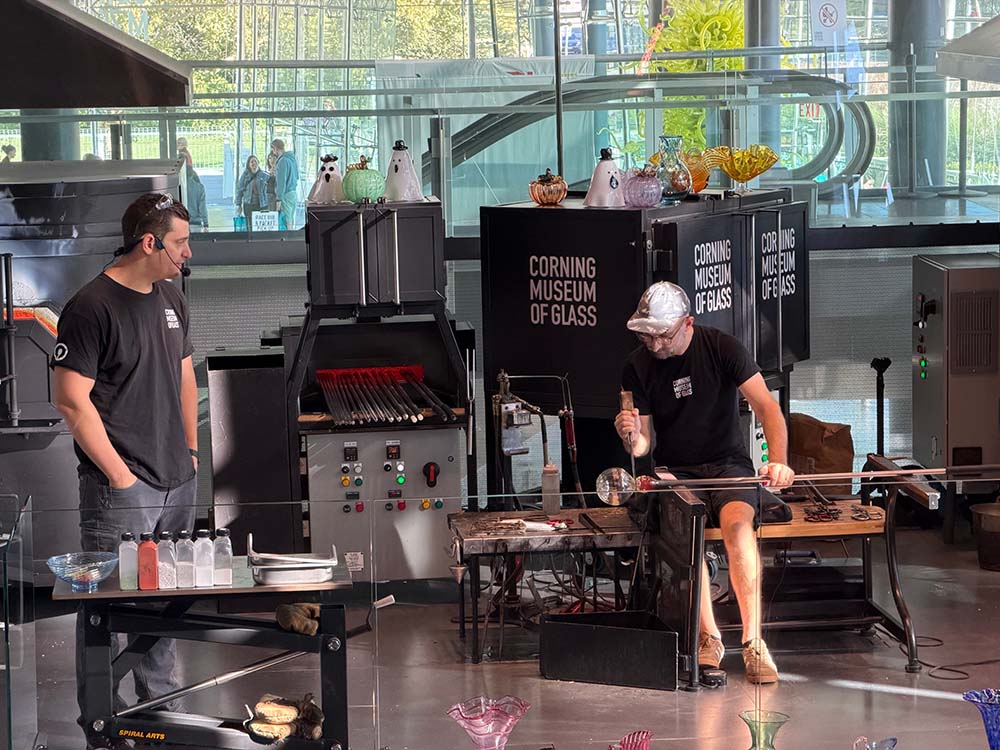
Working with intense heat, they shaped and refined the molten glass, one step at a time. They smoothed the edges, removed the excess, and gradually something beautiful emerged from the fire.
Voilà! Glass worthy of your Sunday dinner table.
I could have spent much longer exploring. There was simply so much to take in, and I found myself appreciating almost every display for entirely different reasons.




After another spin through the gift shop, I headed outside to catch the shuttle to the Rockwell Museum.
American Art and History at the Rockwell Museum
The Rockwell Museum is housed in Corning’s former City Hall, a beautiful Romanesque Revival building dating to 1893.
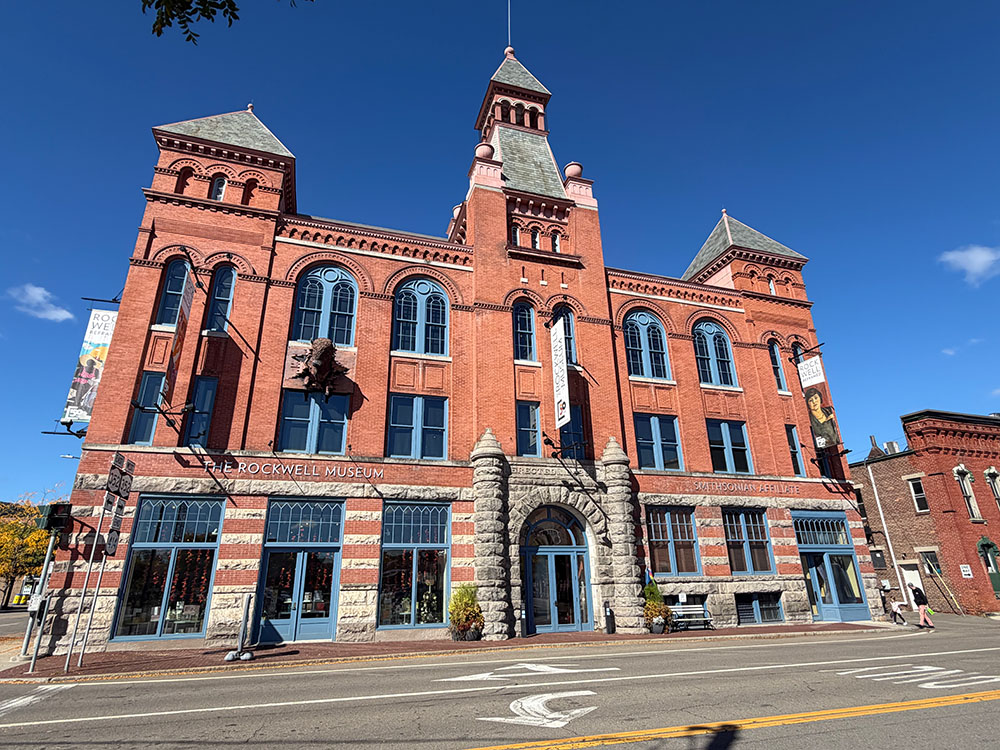
The Rockwell Museum
Severely damaged during the devastating floods of 1972, the building faced an uncertain future until Corning Glass Works helped save it. Restored and reopened as the Rockwell Museum in 1982, it now houses an impressive collection of American art, including works celebrating the landscapes, people and history of the American West.
The museum’s collection has an interesting history, too. Bob and Hertha Rockwell owned a successful store in Corning’s Gaffer District, where they displayed their growing art collection. Eventually, the museum was established through a partnership involving the Rockwells and Corning Glass Works.
I wandered through the galleries, appreciating not only the artwork but also the character of the historic building itself, from its solid wooden staircases to the architectural details that hinted at its former life as City Hall.
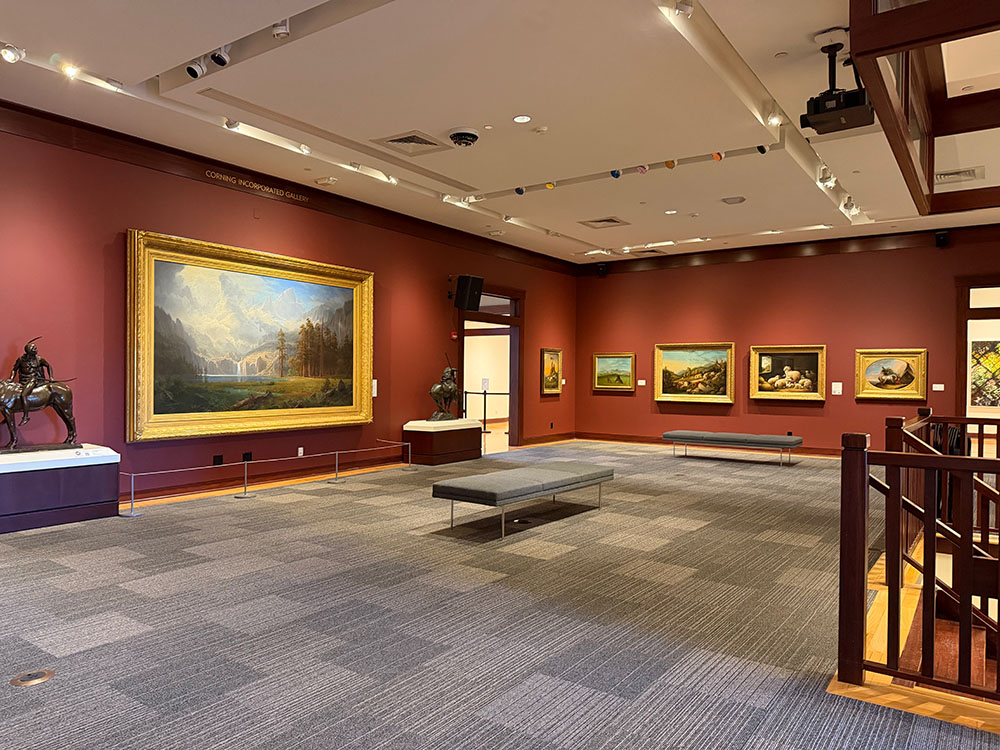
Art of the American West Gallery
I’ve always loved realistic paintings of the American landscape, especially those depicting places I’ve visited. Clyde Aspevig’s Winter in Zion, painted in 1987, immediately caught my attention. Having spent time exploring Zion National Park myself, I enjoyed seeing a familiar landscape through another artist’s eyes.
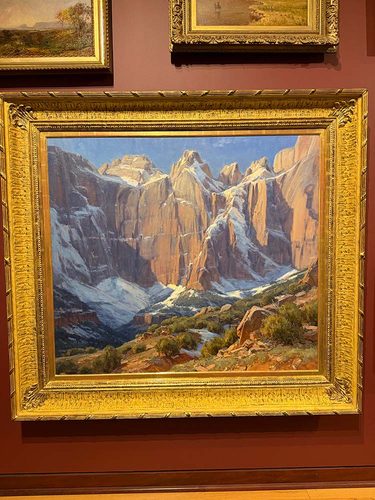
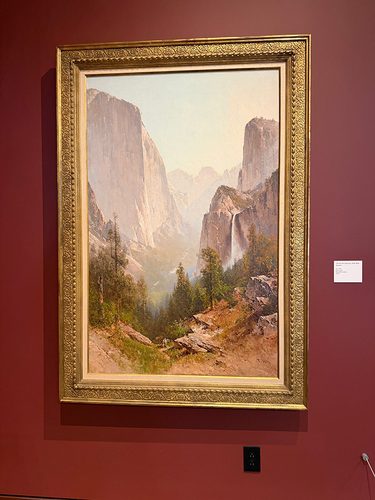
But there was much more to discover than traditional landscape paintings.
Standing in the middle of one gallery was a striking tower of blankets. Marie Watt’s Blanket Stories: Western Door, Salt Sacks and Three Sisters was created using blankets donated by families throughout Western New York. Each had its own history, having been used, loved and eventually contributed to this extraordinary installation. I found myself thinking about the stories that everyday possessions carry, often long after the people who first owned them are gone.


Another piece, Dreams Deferred #50 by Paul Anthony Smith, invited viewers to look beyond the surface. Using layers of paint over a photograph, the artist depicted a flower garden seen through a chain-link fence. Was the fence keeping people out, or protecting the garden from them? I appreciated how the artwork encouraged me to consider both possibilities.
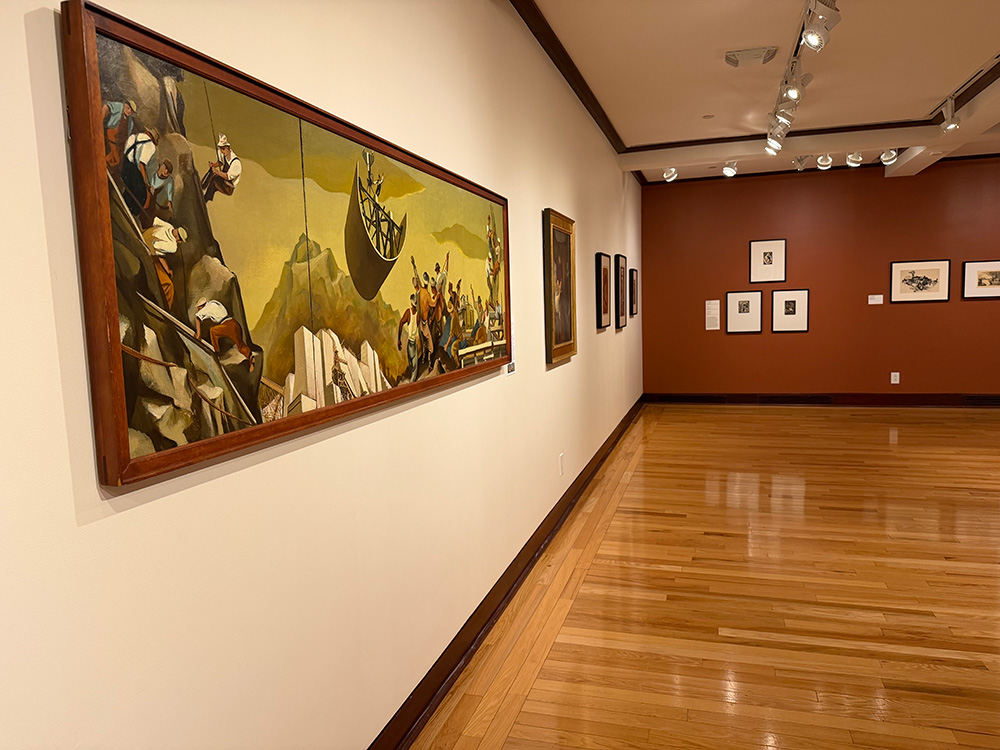
Art at Work: Reframing the Artists of the WPA
An exhibition titled Art at Work: Reframing the Artists of the WPA explored another chapter of American history. During the Great Depression, the federal government employed artists through New Deal programs to document working life, celebrate communities and create public art.
I found this exhibition particularly interesting because I’ve encountered the legacy of those New Deal years throughout my travels. The Civilian Conservation Corps (CCC), another program from the same era, built trails, bridges, shelters and other structures in parks across America. I’ve walked those trails, admired the craftsmanship of those structures and appreciated the work that went into creating places we’re still enjoying nearly a century later.
It was fascinating to see another side of that history through the artists who documented American life during those difficult years.
I moved from floor to floor, room to room, taking it all in.
It’s not an enormous museum, and perhaps that’s part of its appeal. There’s an intimacy to the experience that makes it easy to slow down, examine something more closely, and discover the stories behind the artwork.
And if you visit, don’t overlook the gift shop. It’s worth exploring, too.
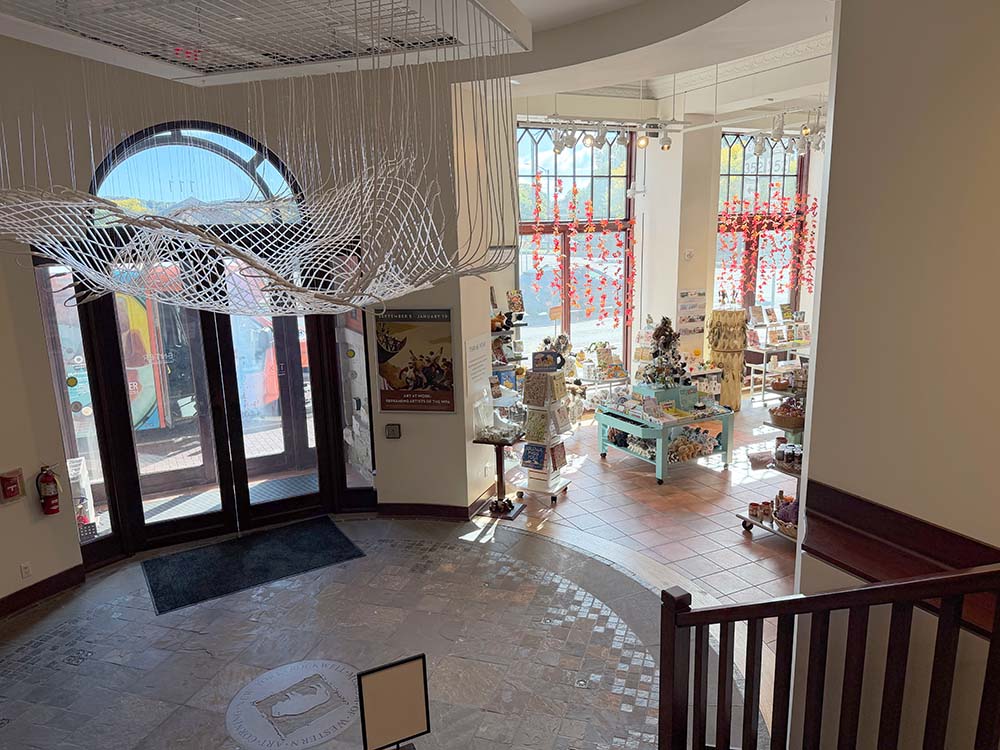
From the Rockwell Museum, it’s only a short walk to Market Street and the heart of Corning’s historic Gaffer District.
An Autumn Afternoon in Corning’s Gaffer District
Considering Corning’s long association with glass manufacturing and CorningWare, the name makes perfect sense. A gaffer is a master glassmaker, and the district honors the skilled artisans who helped establish the city’s glassmaking heritage.
By the time I reached Market Street, the afternoon sunshine was illuminating the golden leaves lining the street.
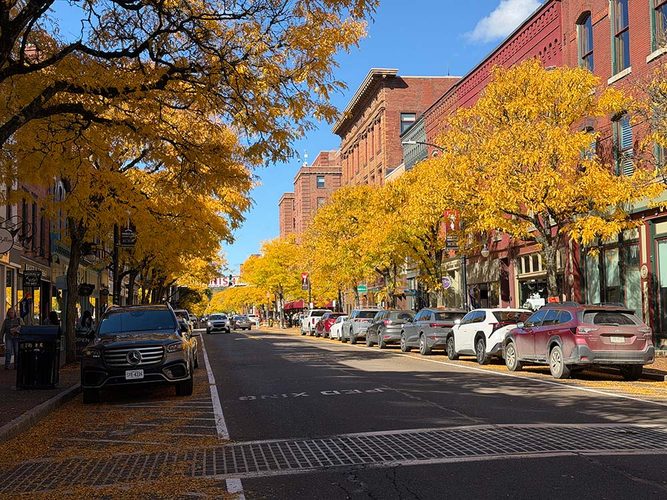
Market Street in the Gaffer’s District
The trees looked almost ablaze, and for a moment I felt as though I’d stepped onto the set of a movie.
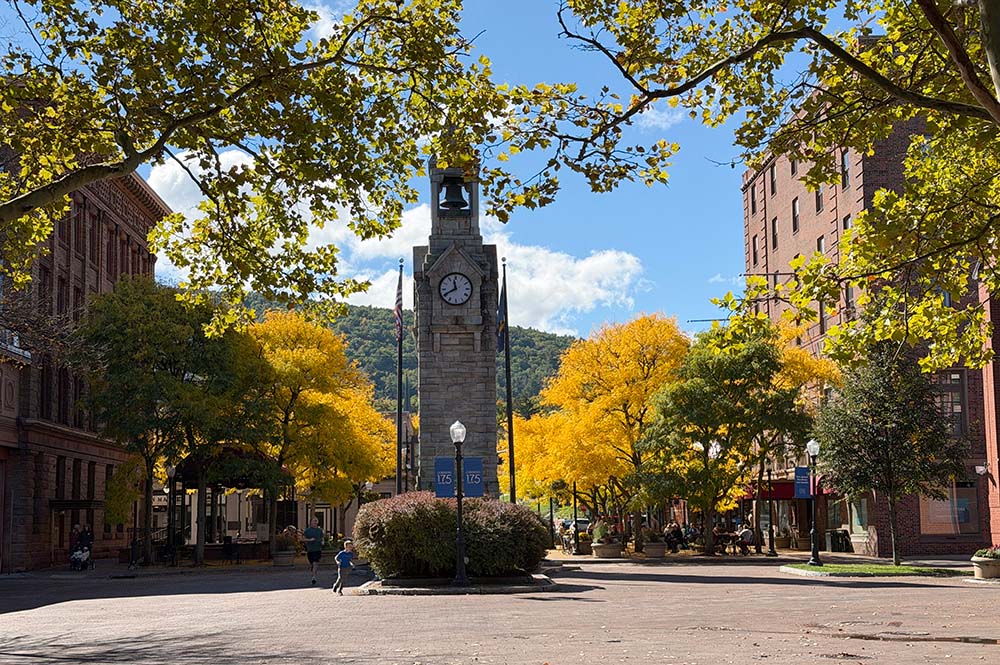
Rather than taking the shuttle back, I decided to walk across the pedestrian bridge and return to my vehicle near the Corning Museum of Glass.
It was a perfect afternoon for a walk.
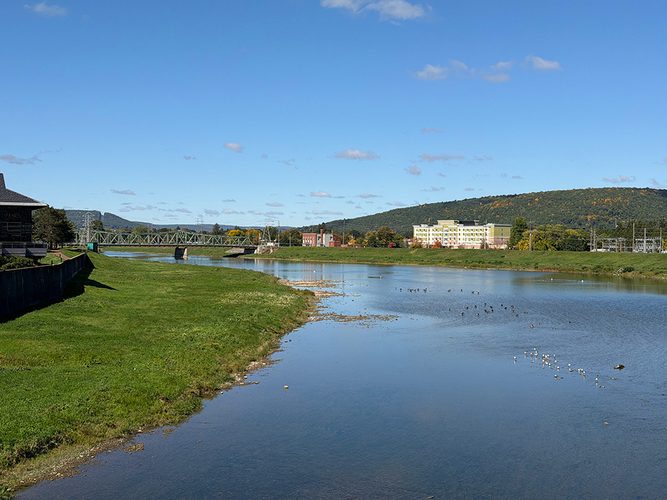
Chemung River
As I crossed the bridge, I found myself reflecting on the past few months. In many ways, it felt as though an asteroid had struck my family in Kingston, leaving me to deal with the aftermath.
I couldn’t undo the impact or put everything back the way it had been. But like the gaffers I’d watched working with molten glass, I’d done my best to take what was in front of me and shape it into something safer and more manageable.
One problem, one decision, one step at a time.
The weight of those months hadn’t disappeared simply because I’d crossed the border. I was still carrying the exhaustion, the responsibilities and the uncertainty of what would come next.
But here I was, in a town built around glass, having spent a day surrounded by extraordinary examples of what people could create from something so fragile.
And there was that meteorite. The same one whose impact site James and I had chosen, quite unknowingly, as the place to begin our marriage.
I couldn’t help smiling at the coincidence.
Perhaps that was what I needed from Corning. Not answers. Not another problem to solve. Just a day to appreciate the beauty that still exists, even after the damage.




Leave a Reply